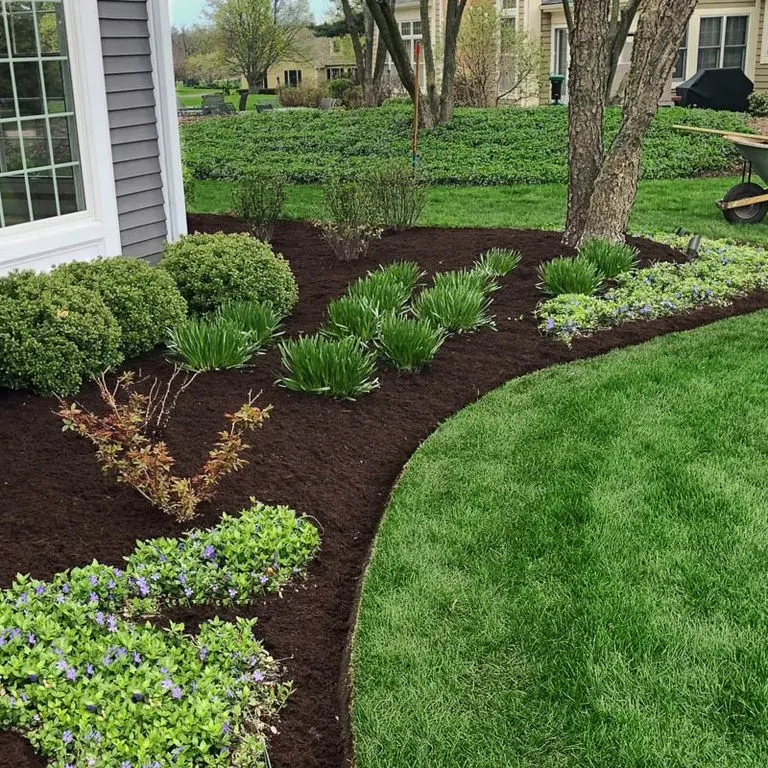
Mulch vs Rock: The Real Difference
Mulch and landscaping rocks serve the same basic job - suppress weeds, hold moisture, and give beds a finished look - but they behave very differently over time. Mulch decomposes and feeds the soil. Rock is permanent and changes nothing. The right choice depends on the bed, the plants, and how much maintenance you want.
Mulch Pros and Cons
Pros: Mulch improves soil as it breaks down, holds moisture for plants, moderates soil temperature, and is easy to refresh each spring. It looks natural and soft around foundation plantings.
Cons: It needs refreshing every year or two, can wash in heavy rain on slopes, and if piled against tree trunks or siding can hold moisture where you do not want it.
Landscaping Rock Pros and Cons
Pros: Rock is low-maintenance and long-lasting, will not blow or wash away easily, and works well in dry areas, around pools, and on slopes where mulch would slide.
Cons: It does not improve soil, reflects heat onto plants (tough on some perennials), makes planting and dividing harder, and weeds that do germinate are harder to pull. Rock also costs more upfront and is harder to change later.
Cost Comparison
Mulch is cheaper per install but is a recurring cost - you refresh it annually or biennially. Rock costs more upfront but lasts for years with only occasional top-ups. Over a 5-year horizon the totals can be similar; the difference is mostly cash flow and maintenance effort.
Which Should You Choose?
Use mulch around foundation plantings, perennial beds, trees, and shrubs where you want healthy soil and a soft look. Use rock in dry zones, near pools, on erosion-prone slopes, and in modern designs where a clean, low-maintenance surface is the goal. Many Finger Lakes homes use both - mulch in the planting beds and rock in utility or pool-adjacent areas.